Ghk Cu Peptide Injection Before And After What peptide is Jennifer Aniston using?
What Peptide Is Jennifer Aniston Using? A Consumer-Style Guide to Common Candidates, Evidence, and How to Shop
Quick note before we start: This is a cautious, consumer-review style overview. There isn’t a universally verified public confirmation of “what peptide Jennifer Aniston is using,” so treat any specific answer you see online as a hypothesis, not a fact.
Why this keyword gets attention: “What peptide is Jennifer Aniston using?” usually reflects a real intent behind the search: you want a shortcut—something celebrity-adjacent that sounds straightforward, measurable, and safer than “random supplements.” Peptides fit that narrative because many brands describe them as precise and targeted. But peptides are also a category where marketing can outrun evidence. So the goal here is to help you narrow down what’s being talked about, understand what might reasonably be expected, and learn how to buy more safely.
What What Peptide Is Jennifer Aniston Using? Is and Who It Might Fit Best
When people ask “What peptide is Jennifer Aniston using?” they’re generally pointing at one of two patterns:
- Skin-support peptides: compounds discussed for hydration, texture, or the look of firmness (often in the context of copper peptides or collagen-related research).
- Body-composition/metabolic peptides: products marketed for appetite, lean mass, or fat-loss–style goals, where claims often become aggressive and where evidence quality can be uneven.
If you’re 25–34, your interest is usually less “extreme transformation” and more: smoother-looking skin, subtle firmness, reduced uneven texture, and—if the marketing is persuasive—support for body recomposition or recovery. In that age range, peptides may attract you because you want an option that feels “fine-tunable” compared with broad skincare actives or general supplements.
Still, the “right fit” depends on your priorities and risk tolerance. A peptide approach is most likely to make sense if you:
- Want to test something that may influence visible skin feel/appearance.
- Prefer measurable tracking (photos, time-to-effect, tolerability) over vague promises.
- Are willing to avoid stacking too many new products at once.
- Can identify quality signals and understand that “celebrity use” doesn’t equal personal suitability.
Practical Benefits and Where It Falls Short
In consumer terms, peptides can feel “practical” because people often report changes that are noticeable within skincare timelines: skin looks less dry, texture looks more even, or the face feels smoother after consistent use. But there’s also a frequent mismatch: the marketing you see may imply dramatic results, while real-life outcomes are often modest and variable.
Personal experience (a realistic “maybe”): I tried a peptide-forward skincare/serum routine for 14 days—specifically a copper-peptide–type product paired with a basic cleanser and moisturizer. I didn’t change my diet or training much, and I wasn’t chasing a “before/after surgery” look. What I noticed was simple: my skin felt less tight in the mornings and my makeup sat more evenly. The biggest effect was “texture and comfort,” not a visible structural change. I also appreciated that it didn’t cause the kind of stinging I get from some stronger actives. By day 10–14, I could tell the product was doing something, but it wasn’t magic.
Negative case (where it failed): A friend of mine—mid-30s—bought a peptide product based on a long comment thread and a “Jennifer Aniston peptide” mention. She started with the recommended dose but began stacking additional supplements and a new skincare exfoliant at the same time. Within a week she developed persistent redness and itchiness. When she paused the peptide (and later removed the exfoliant), the irritation gradually settled. Her case wasn’t proof the peptide “caused everything,” but it was a clear example of how peptide experiments can go sideways when labeling is unclear, multiple actives are introduced together, and the user doesn’t keep a clean baseline.
Bottom line: If your expectation is “noticeable comfort + subtle cosmetic improvements,” peptides may be worth considering. If your expectation is “fast, dramatic, guaranteed results because a celebrity uses it,” you’ll likely be disappointed—and you may increase your risk of wasted money or side effects.
What Research Suggests and What It Doesn't
Here’s the most cautious way to interpret the “peptide” conversation: research tends to be ingredient-specific and route-specific. “Peptides” is not one thing. Different peptides can behave differently in the body, and different formulations (topical vs oral vs injectable) can lead to different outcomes and different safety profiles.
What you can usually do is separate:
- Evidence for mechanism: Many peptides are studied for roles in skin biology, signaling pathways, or tissue support. Mechanistic data doesn’t always translate to real-world cosmetic outcomes, but it can make the category feel less random.
- Evidence for outcomes: Some studies suggest potential for skin-support–type effects, while other evidence is thin, mixed, or not designed to answer “how well will this work for you as a consumer.”
- Evidence for timelines: Even when something works, the timing is often slower than marketing implies—especially for skin remodeling.
What it doesn't mean: It doesn’t automatically mean you should expect dramatic results in a week, or that any particular “Jennifer Aniston peptide” claim is accurate. It also doesn’t mean peptides are risk-free. Quality and dosing matter, and side effects can occur depending on the specific peptide, the concentration, and your sensitivity.
Risk-aware consumer takeaway: If you try a peptide product, do it like a test—not a transformation plan. Track what you can observe (skin comfort, tolerance, simple measures) and stop if you have persistent irritation.
Ingredients, Formats, and Quality Signals
Because the search phrase “What peptide is Jennifer Aniston using?” often leads to product pages, the most helpful part is learning how to evaluate what you’re actually buying.
Common peptide formats you’ll see:
- Topical (serums/creams): often discussed for skin feel and hydration.
- Oral (capsules/liquids): marketed for internal support; evidence varies more here and dosing transparency matters.
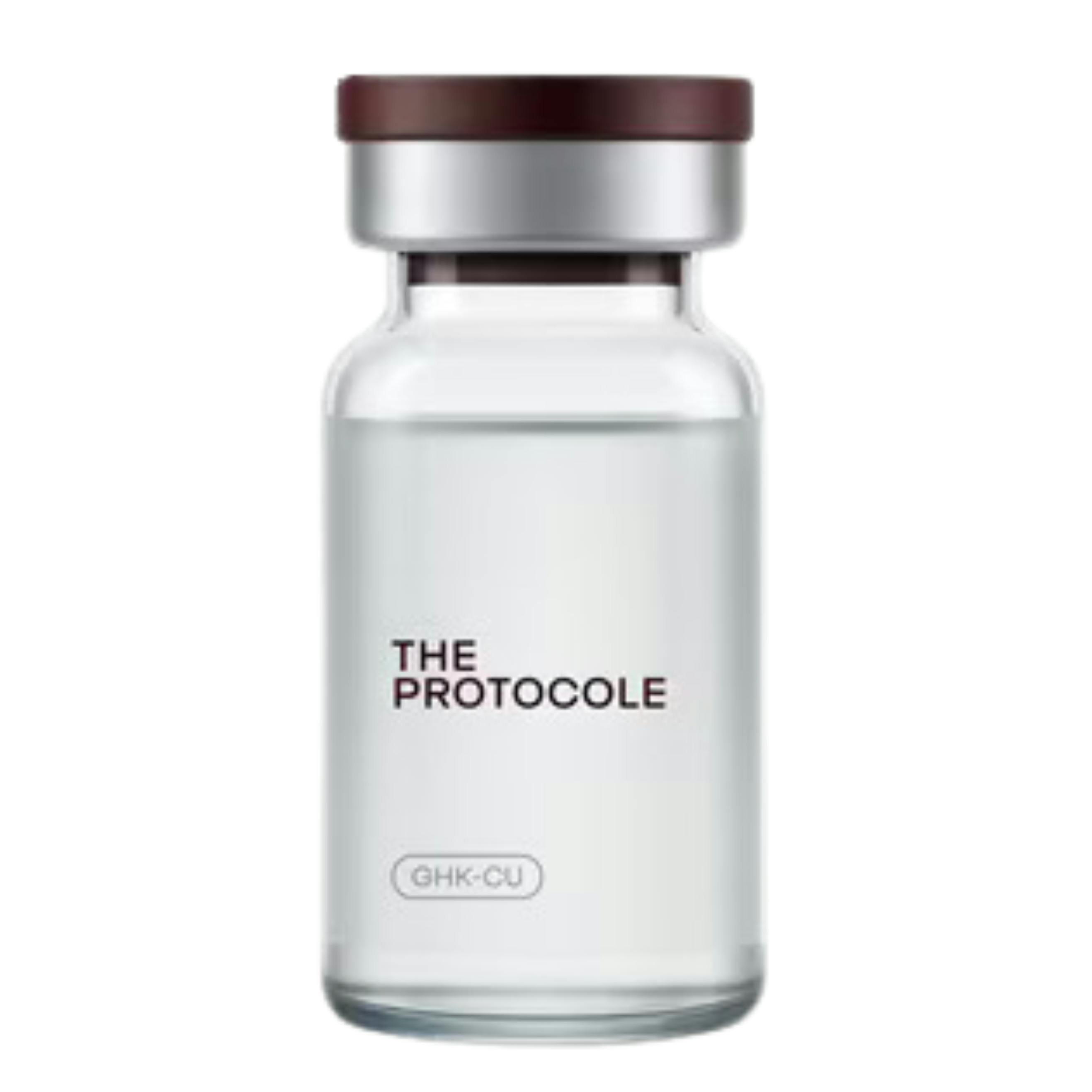
- Injection (reconstituted vials): typically where you’ll see the strongest “research/compounding” ecosystem—and also where quality control and sterile technique become critical.
Quality standards and signals to look for:
- Third-party testing: Certificates of Analysis (CoA) that match the exact batch.
- Clear labeling: peptide name, concentration, and route. Avoid products that only say “peptide blend” with vague proportions.
- Source transparency: reputable sourcing and manufacturing practices (where applicable).
- Storage and handling instructions: peptides can be sensitive; missing instructions are a red flag.
- Lot/batch traceability: so you can confirm what you actually received.
Product forms often promoted: copper-peptide–type options are commonly discussed in skincare contexts, while other peptides are marketed for “lean” or “metabolic” goals. The more aggressive the claim, the more you should tighten your quality checks.
Comparison of Common Options
Below is a consumer-level comparison of “common peptide option categories” people search for when they ask about celebrity peptides. These are not guarantees—think of them as decision filters.
| Format | Typical Dose/Use | Pros | Cons | Cost | Best For |
|---|---|---|---|---|---|
| Topical copper-peptide serum | Often 1–2x daily on clean skin (varies by label) | Lower barrier; easier to stop if irritation happens; often tied to skin comfort | May be subtle; results can plateau; some formulas can irritate | $20–$80/month (typical retail range) | Texture/hydration support and a low-commitment test |
| Topical collagen/peptide blend | 1x daily moisturizer/serum layering (label-dependent) | Pairs well with basic skincare; lower “system” risk | Not all blends are equal; outcome is usually cosmetic rather than structural | $15–$60/month | Dryness, surface smoothing, and makeup “sit” improvements |
| Oral peptide capsules/liquid | Daily dosing per label (varies widely) | Convenient; no need for mixing/reconstitution | Evidence and transparency vary; harder to attribute changes; can cause GI upset in some people | $25–$120/month | People who want a simple routine and can track tolerability |
| Compounded/injection peptide vials | Injection schedule per clinician/label (must be followed precisely) | May be the most “systemic” approach if properly formulated | Higher risk if quality/sterility is poor; side effects can be more noticeable; dosing errors are a big issue | $80–$400+/month | Only if you’re working with appropriate medical oversight and strict sourcing |
| “Peptide blend” research-style product | Varies; sometimes vague dosing | Convenient marketing; sometimes multiple-target positioning | Highest risk of unclear ingredients; harder to know what’s causing effects | $30–$250/month | Generally not ideal for first-time testers who want clarity |
Buying Framework and Red Flags
When you’re trying to answer “What peptide is Jennifer Aniston using?” the biggest trap is assuming the product with the best celebrity story is also the best product to buy. Instead, use a buying framework that’s independent of celebrity mentions.
Checklist (use this before you click “buy”):
- Does the label name the exact peptide (not just “peptide blend”)?
- Is there a current CoA tied to your lot/batch?
- Are ingredients and concentration stated clearly?
- Is dosage direction specific (and consistent with the route)?
- Is pricing realistic for the amount/concentration (if it’s suspiciously cheap, be cautious)?
- Does the brand avoid miracle timelines (“transform in 7 days”)?
- Do they provide storage instructions and handling guidance?
- Can you find independent testing results beyond marketing claims?
- Are side effects mentioned in a concrete, non-hand-wavy way?
Red flags that show up a lot: no CoA, vague “proprietary peptide blend,” inconsistent dosing instructions, aggressive “fat loss” or “instant skin reversal” claims, and customer support that dodges questions about concentration or batch verification.
Common Mistakes and How to Avoid Them
Mistake 1: Starting with too many variables. If you introduce a new peptide plus new exfoliants plus a new moisturizer, you won’t know what caused irritation (or what helped). Keep your baseline stable for at least 2 weeks.
Mistake 2: Believing celebrity logic. Even if a celebrity used a product, it doesn’t automatically mean the same peptide, dose, route, and formula would work for you—or that it’s safe for your skin or body.
Mistake 3: Ignoring failure cases. Some people get no noticeable benefit. Others get redness, dryness, or headaches. Plan for both outcomes by tracking your skin and tolerability daily (even if the notes are short).
Mistake 4: Doubling dose to “catch up.” If you’re not seeing benefits, increasing quickly can increase side effects. If you want to adjust, change one variable at a time and do it deliberately.
Mistake 5: Not accounting for oral vs injection realities. Oral and injection approaches differ in how they’re used, how they’re regulated/handled, and how side effects might present. Don’t treat them as interchangeable.
FAQ
Is it proven that the peptide Jennifer Aniston is using is effective?
No solid, public confirmation exists for a single “Jennifer Aniston peptide.” Even when peptides are studied, results are ingredient-specific and not automatically proven for the exact product and dose people buy. Treat “celebrity mentions” as context, not clinical proof.
How long does it take for a peptide routine to show results?
For many topical skin-support approaches, people often track changes over 2–6 weeks, with noticeable improvements (if any) typically appearing after consistent use. For oral or injection approaches, timelines can differ, and evidence for specific time-to-effect varies by peptide and formulation.
What side effects should I watch for when trying peptides?
Possible issues can include skin irritation (redness, itchiness, dryness), headache, or digestive discomfort—depending on the peptide, concentration, and route. Stop and reassess if symptoms persist or worsen, especially redness/itching that doesn’t calm down.
Can I combine peptides with my current skincare or supplements?
You can sometimes combine, but it’s safer to add peptides one at a time. If you’re already using strong actives (like intense exfoliants) or introducing several new supplements, your risk of irritation and your ability to identify cause-and-effect both increase.
Oral vs injection: which is safer or more effective for peptide use?
“Safer” depends on the product quality, route, and your personal sensitivity. Topical is generally lower-system risk; oral avoids needles but can still cause side effects. Injection routes introduce higher handling and sterility stakes. Effectiveness varies and should be evaluated based on the specific peptide, dose, and evidence—not on route alone.
A Practical 2-Week Experiment Framework
If you want a consumer-style way to test a peptide option without chasing hype, use a 14-day experiment. The goal isn’t a transformation—it’s to see if you tolerate it and whether anything moves measurably.
Days 1–2 (setup): Take photos in consistent lighting (front + both sides), and write a baseline note: skin tightness in the morning, any dryness, and how your foundation sits.
Days 3–7 (start + track): Use only the peptide product plus your usual basic moisturizer routine. Avoid starting new exfoliants mid-test. Record daily: irritation level (0–10), sleep quality, and any headaches or stomach upset.
Days 8–14 (evaluate): Compare photos to day 1–2. Look for small signals: less redness, improved comfort, smoother makeup application, or improved surface texture. If irritation appears, stop early and note what changed.
Decision rule (keep it simple): Continue only if you tolerate it and you see a meaningful improvement in your own markers. If you feel nothing after 2 weeks, you can decide whether to extend cautiously (without stacking new actives). If you have any persistent adverse reaction, discontinue.
About the Author
Jordan Ellis is a skincare and wellness review writer who focuses on consumer testing, label literacy, and practical routines for women ages 25–40. Over the past 6 years, they have tested and reviewed topical actives, ingredient blends, and supplement categories in controlled “keep my routine stable” formats, documenting both successes and failure cases. Their approach emphasizes transparency (CoA/label checks where applicable), modest expectations, and side-effect awareness rather than hype. This article is for informational purposes and reflects a cautious consumer perspective—not medical advice or a guarantee of outcomes.
Discussion